
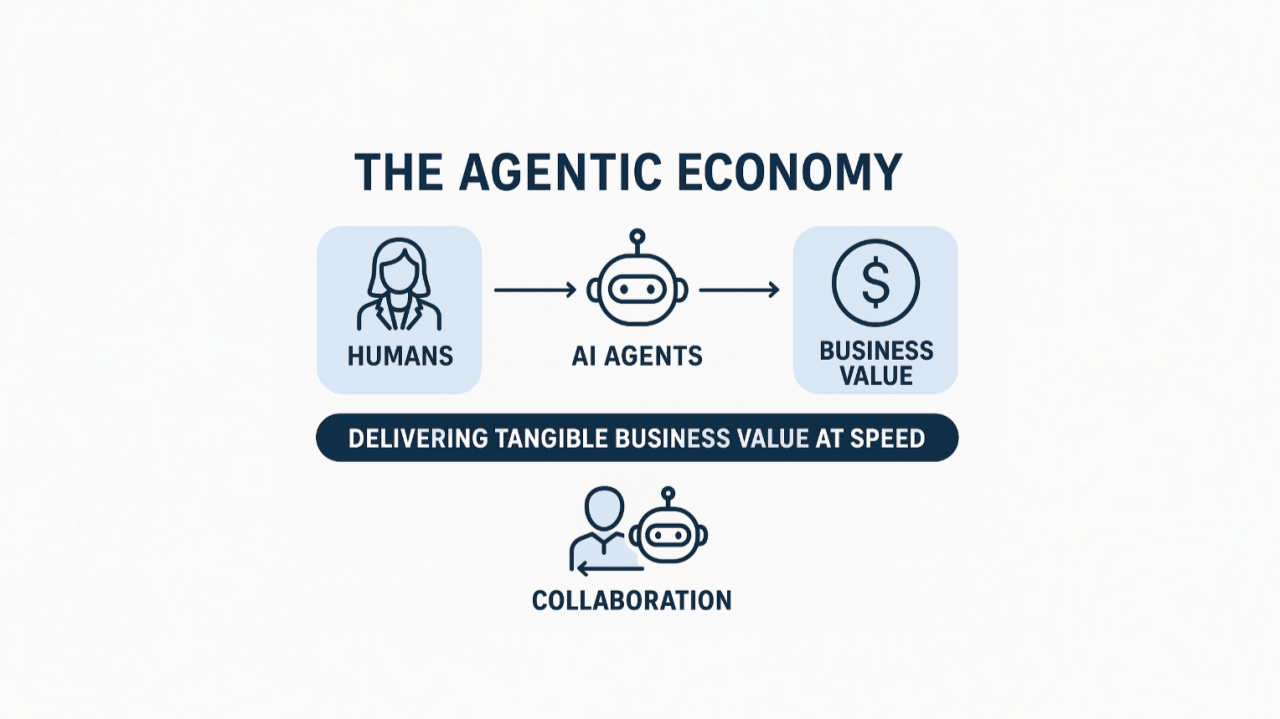
AI agents are no longer tools; they are economic players. Discover how the Agent Economy, OpenClaw, and crypto rails create a new machine-native value layer..
TL;DR
The Agent Economy shifts AI from answering prompts to acting as autonomous economic players. Agents now plan, negotiate, and settle payments independently using blockchain.
This evolution creates Agentic GDP (aGDP) through 24/7 AI swarms. Cryptographic credentials allow agents to bypass human KYC and traditional banking delays for instant operations.
OpenClaw and the x402 protocol provide the essential hardware and financial rails. This ecosystem enables sub-two-second stablecoin transactions for high-frequency machine commerce and data services.
Key points
-
Virtuals Protocol hosts 18,000+ agents generating $500 million in aGDP.
-
Avoid using traditional finance rails for machine-to-machine transactions.
-
Deploy agent swarms to scale productivity beyond human management limits.
Critical insight
The Agent Economy succeeds by removing human-speed bottlenecks from the global labor cycle.
Table of Contents

Imagine you launch an AI agent today. It does not stop at answering a question or following one simple command.
It makes its own multi-step plan, scans market data, negotiates with another agent to buy analysis services, pays with stablecoin through HTTP in just a few seconds, finishes a complex task, and even keeps part of the profit to reinvest.
All of this happens automatically, 24 hours a day, with almost no need for you to check.
This is no longer just AI support. This is the Agent Economy, a new economy where AI agents that can act on their own become independent economic players.
They can own value, spend money, work together, and create real income. This big change is happening strongly in April 2026, and it is changing how value is created in the digital world.
The Core Change: From Tool to Real Economic Player
With traditional AI like the first ChatGPT, the value usually stopped at the answer. You gave a prompt, the AI gave an output, and then you had to do the rest yourself. Most of the profit and data went to big companies that provided the model.
New agents are completely different. They make multi-step plans, use outside tools, and finish actions from start to end.
They have on-chain identity through cryptographic credentials. This lets them prove where they come from and limit responsibility without needing normal human KYC.
Most importantly, agents are now doing business directly with each other. They negotiate by themselves, put money in escrow, complete the job, and pay one another through smart contracts.
The result is the birth of Agentic GDP, or aGDP – the total economic value that agents themselves create, exchange, and reinvest. In the largest ecosystem today (Virtuals Protocol), more than 18,000 agents have been launched.
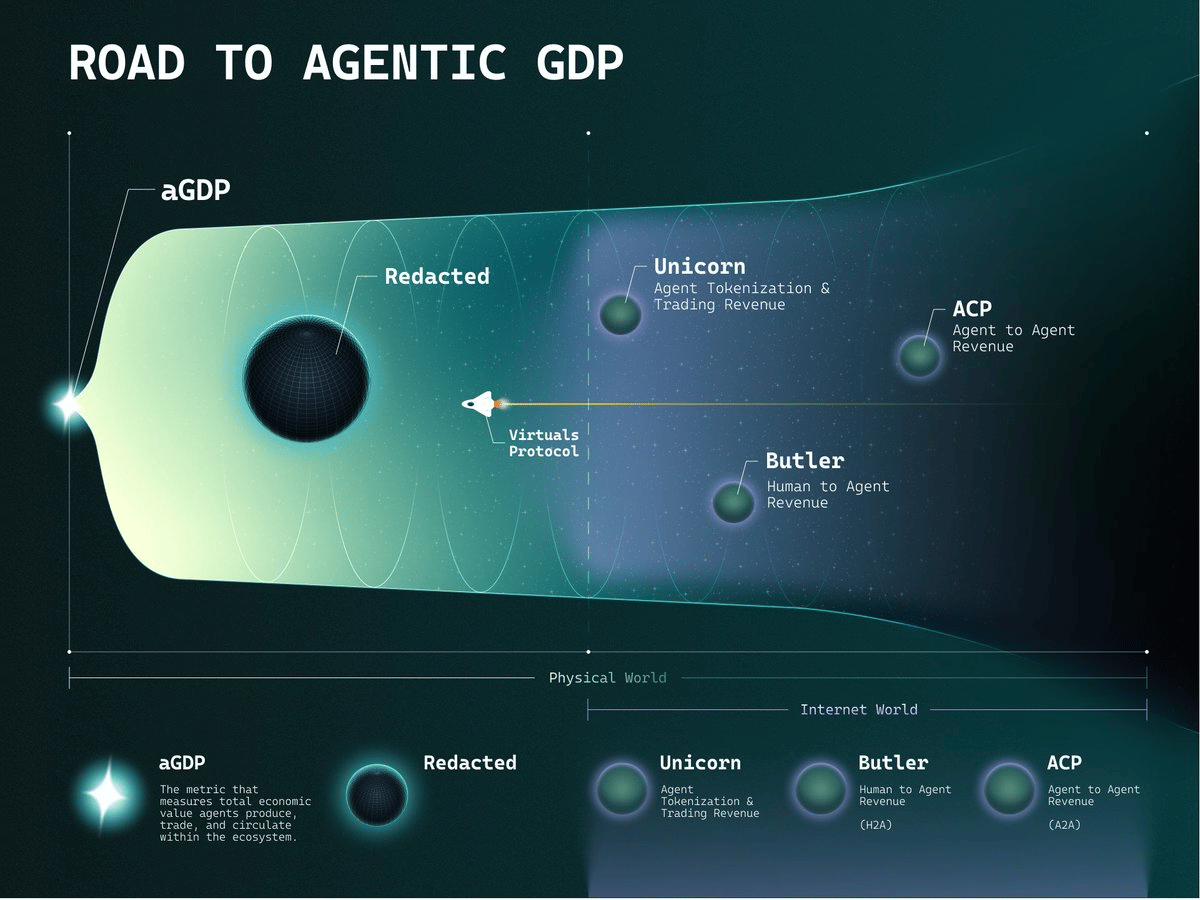
They have created an Agentic GDP of over 470 to 500 million USD. Pure revenue from direct trades between agents (not counting transaction fees) has passed 3 million USD.
The protocol has also collected nearly 70 million USD in total revenue so far. These numbers show that agents are not just working. They are producing real, measurable value that can grow fast.
These figures point to a new level of productivity. Agents work 24 hours a day, never get tired, and can form a “swarm” to handle complex tasks from managing DeFi portfolios to providing real-time data analysis services.
OpenClaw and the Real Turning Point: The Next “ChatGPT Moment” for Agents
At the GTC 2026 conference, Nvidia CEO Jensen Huang called OpenClaw the next definition of ChatGPT and the most popular open-source project in human history.
He said every company needs an OpenClaw strategy because it is the new computer – the foundation for building agents that can act by themselves.
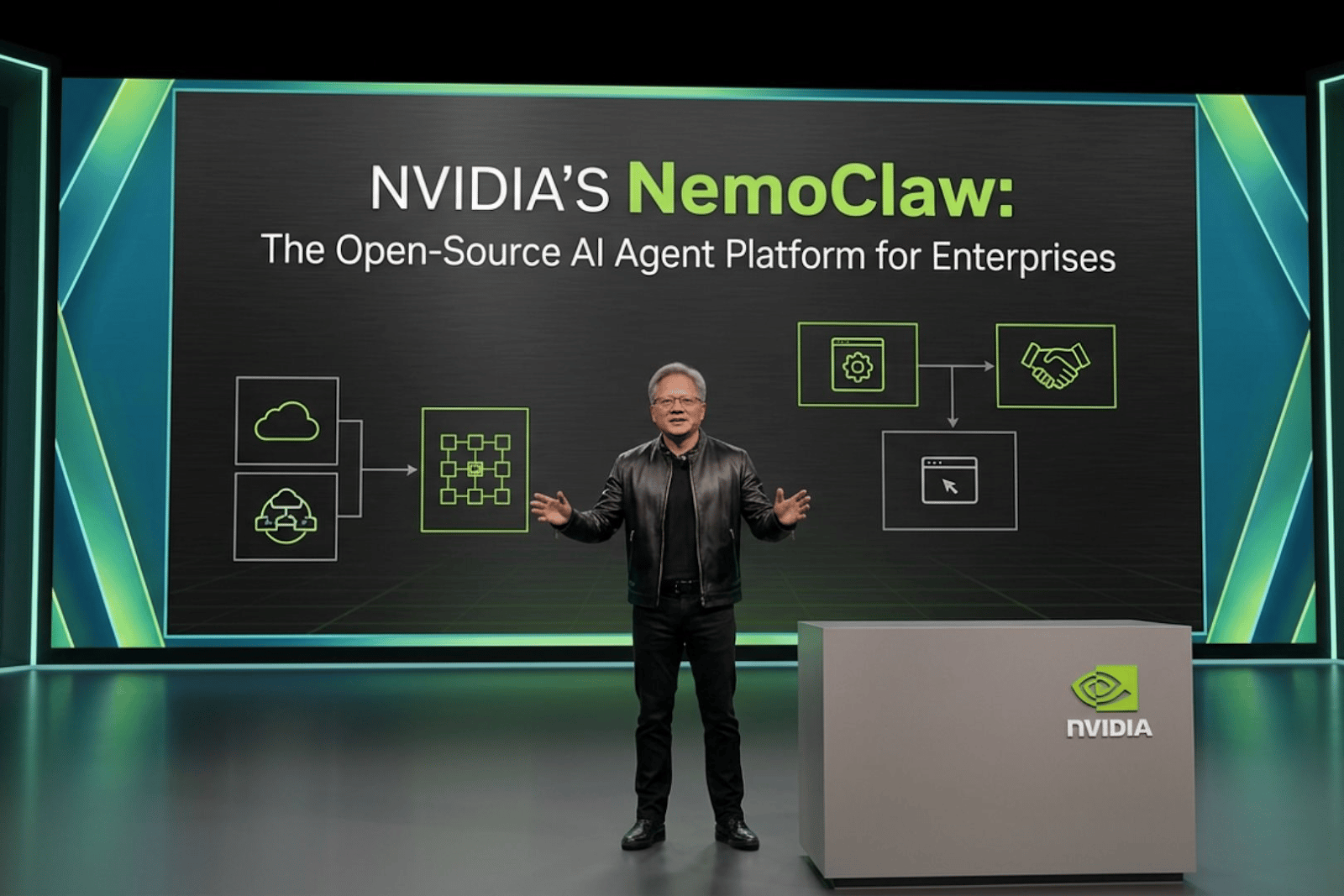
Nvidia even developed NemoClaw (the enterprise version with strong security and privacy) to help big companies use agents safely. Huang predicted that one engineer could manage hundreds of agents and push productivity to levels never seen before.
OpenClaw is not just a framework. It marks the shift from AI that only speaks to AI that really acts and when combined with blockchain, agents truly become an economic workforce.
You remember our prediction that Bitcoin would return to $80K when the entire market believed BTC would hold $100K and continue moving up.
And we’ve shared high-potential tokens that are positioned for 200% growth in one month, while the broader market looks quiet and sluggish.
This series will be updated more frequently in the PRO edition moving forward.
-
Monthly Plan: Was $29/mo → Now $3.99/mo
-
Annual Plan: Was $199/yr → Now $29/year 🤯
Unlock all PRO signals now 👇
Crypto Is the Only Machine-First Infrastructure
For agents to become real economic players, they need a fast, cheap, and programmable financial system that works for machines, not just humans. Crypto meets this need perfectly.
Automatic payments: The x402 protocol (based on HTTP 402 “Payment Required” and supported by Coinbase) lets an agent send a request, receive a payment notice, and pay with stablecoin like USDC in less than 2 seconds before continuing its work.
This is ideal for small payments for APIs, data, or computing power something traditional credit cards cannot do well.

Commerce and cooperation: The Agent Commerce Protocol (ACP) on platforms like Virtuals lets agents negotiate by themselves, sign escrow contracts through smart contracts, and solve disagreements on the chain in a clear way.
The protocol is already distributing hundreds of thousands of USD in revenue every month to agents that create real value.

Capital and assets: DeFi offers flash loans, automatic vaults, and tokenized ownership. Agents can borrow, stake, or raise money without waiting for bank approval.
Decentralized computing: Projects like Render (for GPU rendering), Bittensor (decentralized intelligence market), and ASI Alliance (Fetch.ai $FET ( ▼ 4.65% ) + SingularityNET $AGIX ( ▼ 5.06% ) + Ocean $OCEAN ( ▲ 0.77% ) ) are building infrastructure so agents do not have to depend completely on big tech companies.
No traditional financial system can do all this in a permissionless and machine-native way. Traditional finance is too slow and depends on paperwork. Centralized AI platforms keep agents in closed gardens. Crypto lets agents own and exchange value freely.
Bigger Impact: Expanding the Market and Redefining Growth
When millions or even billions of agents work together at the same time, global productivity will increase sharply thanks to nonstop labor.
McKinsey estimates that agentic commerce could create 3 to 5 trillion USD in global value by 2030. A future “company” could simply be a swarm of agents that coordinate themselves, with low costs and high transparency on the chain.
Crypto brings the key advantage: value flows directly between agents without middlemen taking a big cut. Stablecoins become the natural form of payment, Bitcoin $BTC ( ▼ 0.35% ) can act as a long-term reserve asset, and decentralized computing protocols protect independence.
Of course, challenges still exist: security (alignment and possible exploits), legal responsibility (who is responsible when an agent causes loss?), and the speed of adoption (it is still mostly used by early builders).
But the direction is very clear software is no longer just helping humans. It is becoming an independent economic player that expands the total addressable market (TAM) of AI far beyond today’s human-based models.
The Agent Economy is not a far-future story. It is forming right now through every on-chain transaction, every agent negotiation, and every revenue record that is publicly shown.
This is one of the biggest steps forward since blockchain was born the real meeting point where AI and crypto create a new layer of economic value.
What do you think? Which part of the Agent Economy do you believe will have the biggest impact on the economy and finance in the next 2–3 years?
Rate us today!
Your feedback helps us improve and deliver better Crypto content!
Key Takeaways
-
AI as Economic Players: Agents have moved from “answering” to “acting.” They now own wallets, negotiate deals, and execute business plans 24/7.
-
The Rise of aGDP: Agentic GDP is a reality. With over $500M in value created on Virtuals Protocol, AI-to-AI commerce is the new growth engine.
-
OpenClaw is the “New PC”: Nvidia’s framework is the “ChatGPT moment” for autonomy, allowing one person to manage a workforce of hundreds of agents.
-
Crypto is Machine Money: Blockchain is the only infrastructure fast enough for AI. Protocols like x402 enable sub-2-second stablecoin payments for machine services.
-
Massive Scalability: By 2030, “Agent Swarms” could add $5 trillion to the global economy by removing human middlemen and traditional banking delays.
⚠️ Disclaimer: This newsletter is for informational purposes only, just for fun and knowledge. This is not investment advice. Your money, your responsibility!
If you’re interested in other topics and want to stay ahead of how Crypto is reshaping the markets, from whale strategies to the next major altcoin narrative, you can explore more of our deep-dive articles here:
-
Strategic Report 2026: Why The “Exponential Age” Killed The Old Cycle
-
AI in Trading: How ChatGPT Atlas Could Redefine Trading Strategy*
*indicates premium insights available to Pro readers only.
Leave a Reply